Loading...
EN

Presents

New Bridal Collection 2027 "Anima Napoletana"

Boxus
Boxus
Boxus

History

History
We are a young Italian wedding dress maison. Our creations are characterized by an unmistakable style that, dress after dress, combines the Mediterranean flavor of our origins with an irrepressible passion for innovation. The company, founded by a married couple in love with this world, is the second generation of a family with over 40 years of experience in the sector. Michela Ferriero has created an unmistakable style, raising the bar of modern fashion design. His style, in fact, is very popular for the exceptional fit. In addition to being bold, modern and sexy
MISSION
Revolutionizing the world we love most, that of wedding dresses. Creating wedding dresses of the highest level, as hardly anyone does anymore: made entirely in Italy with the finest fabrics, carefully selected in the world market by expert hands.A new way of understanding the bride: no longer static, linked to obsolete consumption models but dynamic, engaging, in which the bride is truly the protagonist


Brands

Boxus
Boxus
Boxus

Program

7 MARCH
  • 4:00 PM start of transfers by shuttle from Hotel Royal Continental Naples to Palazzo Belvedere (duration 30 minutes)
  • 5:00 PM fashion show begins
  • 6:00 PM cocktail reception on the terrace begins
  • 8:00 PM start of transfers from Palazzo Belvedere to Hotel Royal Continental Naples (duration 30 minutes)
8 MARCH
  • from 9:00 AM to 6:00 PM appointments with buyers for collection viewings, at the salons of Hotel Excelsior in Naples
9 MARCH
  • from 9:00 AM to 6:00 PM appointments with buyers for collection viewings, at the salons of Hotel Excelsior in Naples

Locations

  • PALAZZO BELVEDERE NAPOLI
    palazzobelvederenapoli.com
    Palazzo Belvedere
    Via Aniello Falcone, 122, 80127 Napoli NA
    Telefono +39 081 558 62 61


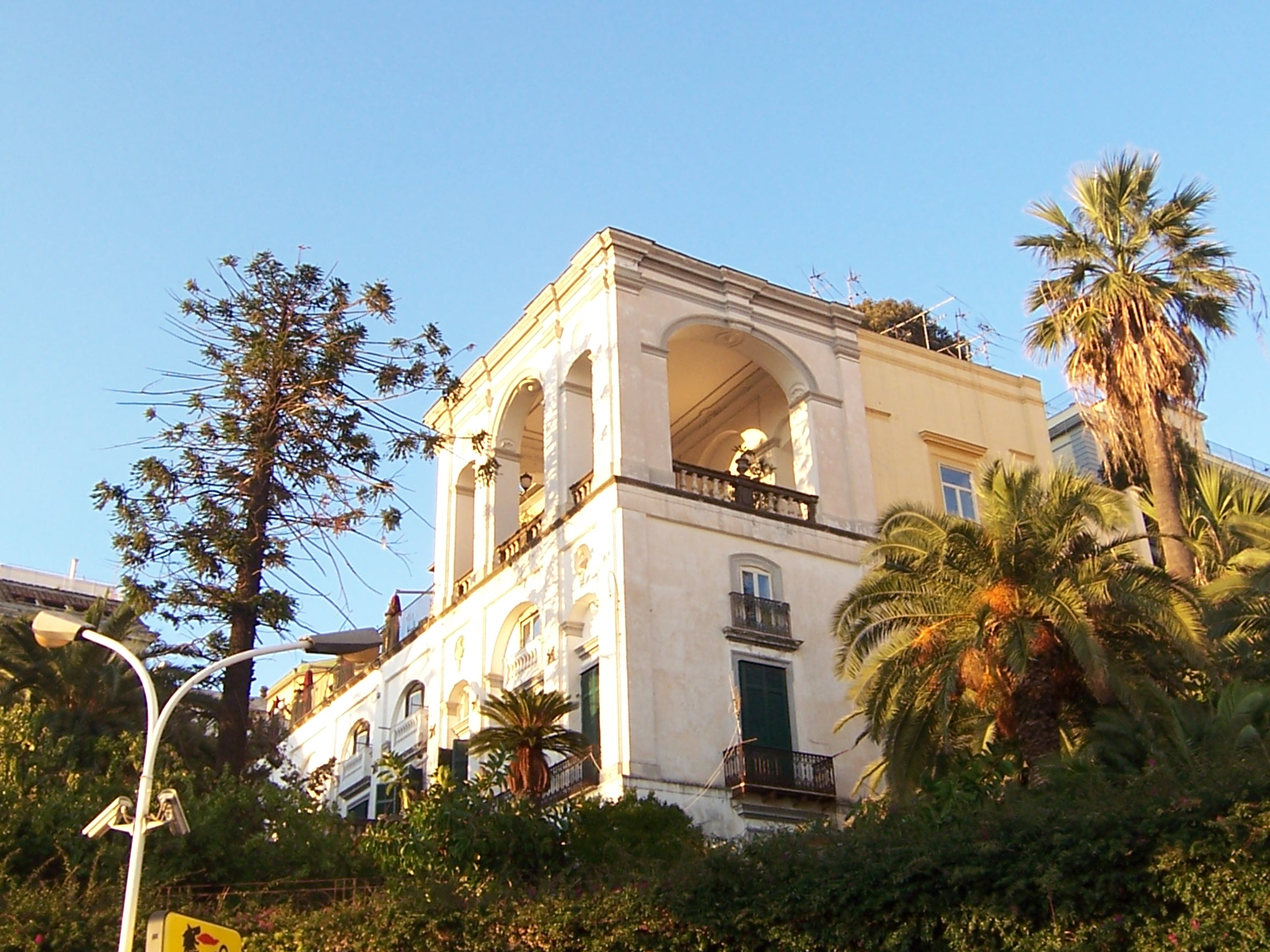
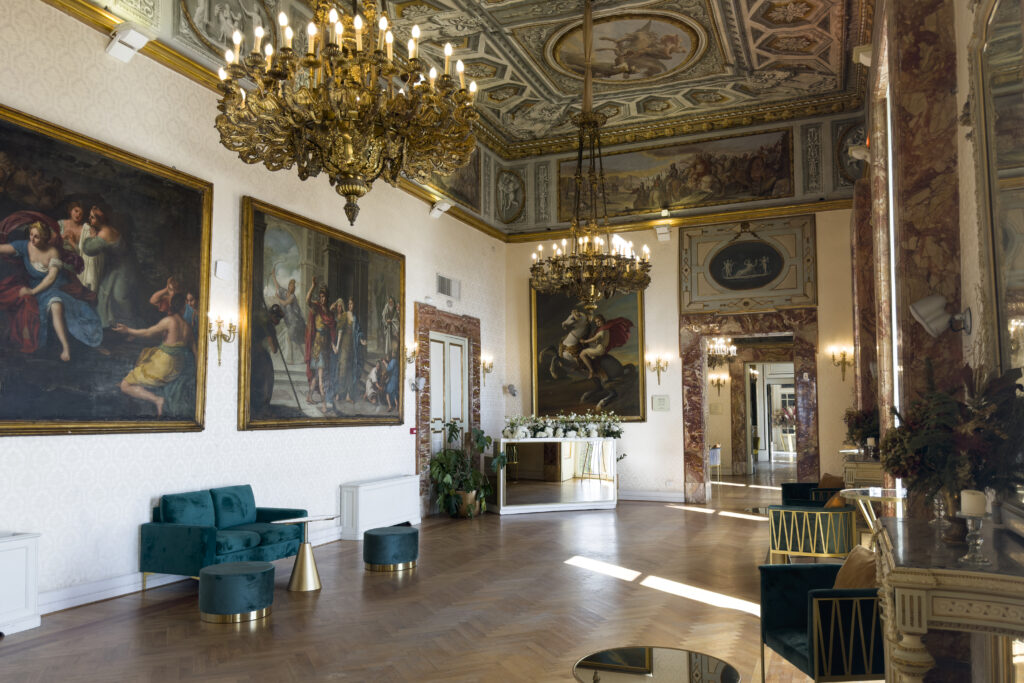
    Palazzo Belvedere is a monumental villa in Naples, located in the hilly Vomero neighborhood, in a privileged position overlooking the city and the Gulf. Originally a palace outside the city walls in the second half of the 17th century, it was built between 1671 and 1673 by order of the wealthy Flemish merchant and banker Ferdinand Vandeneynden, a central figure in the economic and cultural life of Naples at the time. The building was erected on the ruins of an ancient casino di delizie (a charming mansion) belonging to the Altomare family, places designed for pleasure, relaxation, and contemplation of the landscape. The design, attributed to Presti, reflects the idea of ​​an elegant and luminous residence, conceived to interact with the exterior and enhance the view as a fundamental architectural element. Interesting fact: the name Belvedere is not only evocative, but perfectly describes the villa's original purpose: a privileged observation point, where the gaze could roam freely over the city and the sea. Even today, this visual relationship with Naples remains one of the most distinctive and fascinating features of the palace.
  • Eurostars Hotel Excelsior
    eurostarshotels.it
    Via Partenope, V. Francesco Caracciolo, 48, 80121 Napoli NA
    Telefono: +39 081 7640111


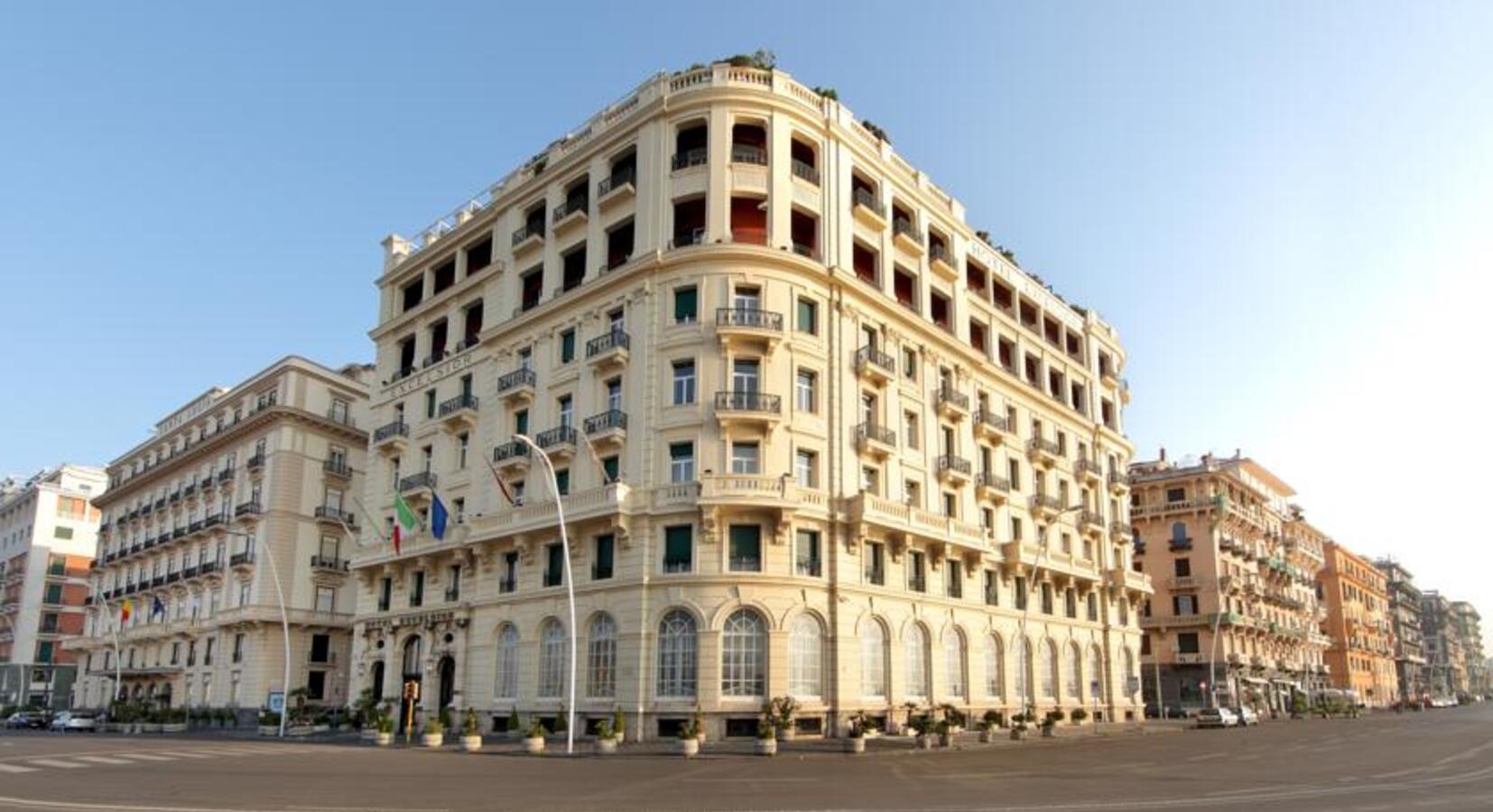
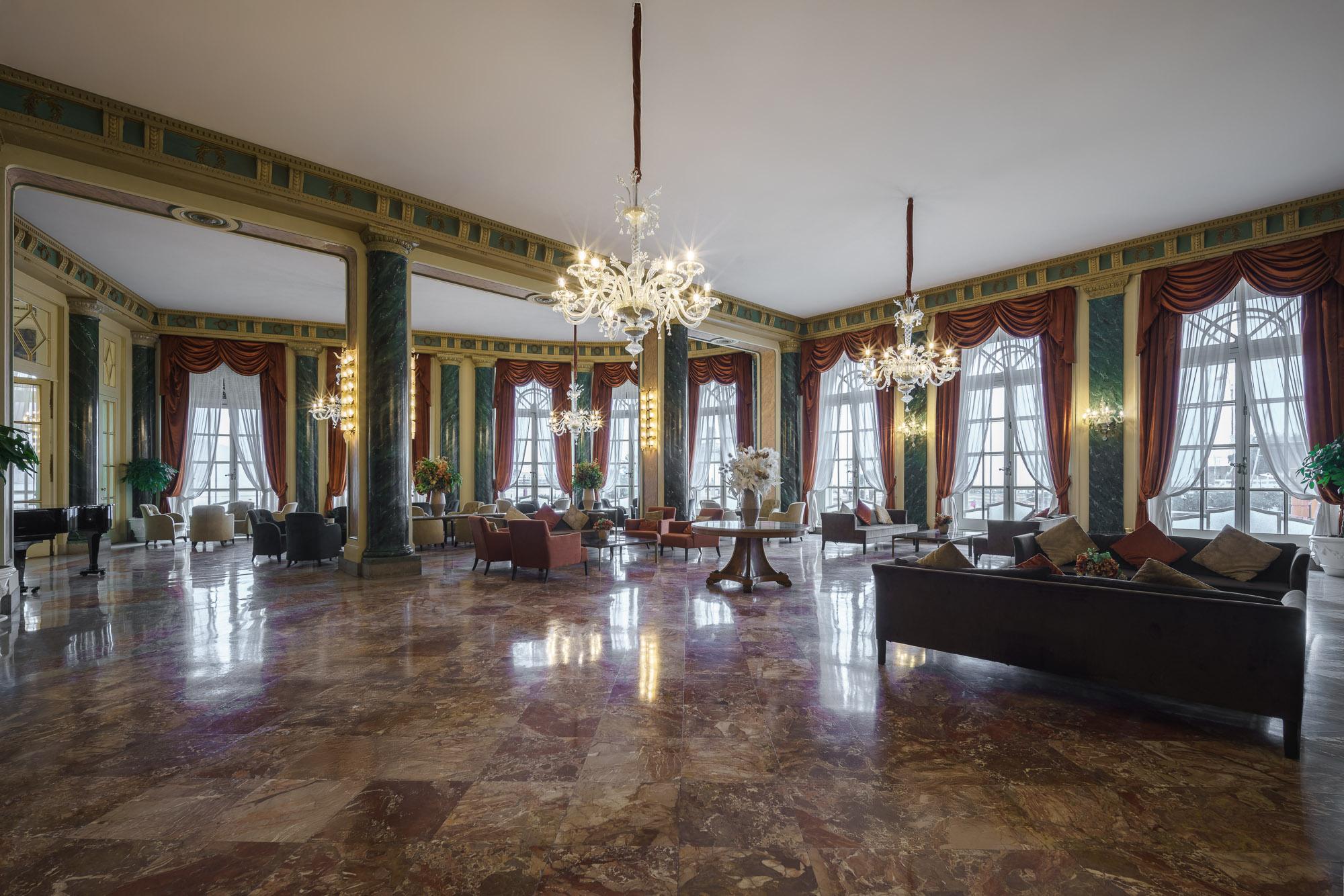
    Eurostars Hotel Excelsior is one of Naples' most iconic historic hotels, overlooking the Lungomare Caracciolo, opposite Castel dell'Ovo and boasting a privileged view of Vesuvius and the Gulf. Inaugurated in the early 20th century, it was built to welcome the international elite—artists, intellectuals, and travelers who chose Naples as a key stop on the Grand Tour. Over the years, the Excelsior has become a symbol of timeless elegance, preserving the allure of classic hospitality: bright halls, refined details, and atmospheres that evoke a cosmopolitan and sophisticated Naples. Its panoramic terraces still represent one of the city's most evocative vantage points, where the landscape becomes part of the experience. Interesting fact: for decades, it has been a favorite haunt of international film, music, and culture personalities, helping to build the legend of Naples as a city of charm, beauty, and exceptional hospitality.

Partner

Madrina della sfilata
Cira Lombardo
Lorem Ipsum is simply dummy text of the printing and typesetting industry. Lorem Ipsum has been the industry's standard dummy text ever since the 1500s, when an unknown printer took a galley of type and scrambled it to make a type specimen book.
www.ciralombardo.com
Regia

Lorem Ipsum is simply dummy text of the printing and typesetting industry. Lorem Ipsum has been the industry's standard dummy text ever since the 1500s, when an unknown printer took a galley of type and scrambled it to make a type specimen book.
www.sitoweb.com
Trucco e Parrucco
Lorem Ipsum is simply dummy text of the printing and typesetting industry. Lorem Ipsum has been the industry's standard dummy text ever since the 1500s, when an unknown printer took a galley of type and scrambled it to make a type specimen book.
www.sitoweb.com
Fotografi
Maisto Fotgrafi
Lorem Ipsum is simply dummy text of the printing and typesetting industry. Lorem Ipsum has been the industry's standard dummy text ever since the 1500s, when an unknown printer took a galley of type and scrambled it to make a type specimen book.
www.sitoweb.com

Napoli

Cosa fare a Napoli

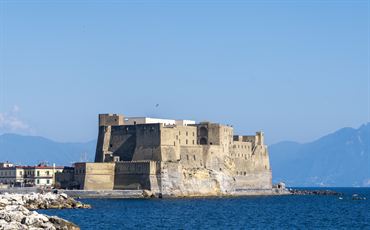
  • Castel dell'Ovo

    Castel dell’Ovo is the oldest castle in Naples and one of the city’s most evocative landmarks, suspended between history, legend, and the sea.

    Its origins date back to Roman times, when a villa belonging to Lucius Licinius Lucullus stood on the islet of Megaride. Over the centuries, the structure was transformed into a fortress and played a strategic role in the defense of the city, serving at various times as a royal residence and a prison.

    The name “Castel dell’Ovo” is linked to a medieval legend: it is said that the poet Virgil hid a magical egg within the castle’s foundations, upon which the stability of the fortress and the fate of Naples depended. If the egg were ever to break, the city would suffer terrible disasters.

    Today, Castel dell’Ovo is open and accessible, ideal for a romantic stroll or for admiring panoramic views of the Gulf of Naples and Mount Vesuvius. From its terraces, especially at sunset, visitors can enjoy breathtaking views, and its spaces often host exhibitions and cultural events.

    The castle is located in the seaside district of Santa Lucia, just steps from the Caracciolo waterfront, and represents an unmissable stop for anyone wishing to discover the most authentic and poetic soul of Naples.
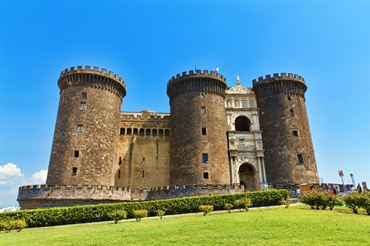
  • Castel Nuovo – Maschio Angioino

    Castel Nuovo, also known as Maschio Angioino, is one of the most recognizable symbols of Naples and a key landmark in its political and cultural history.

    The fortress was built in the 13th century at the request of Charles I of Anjou, who wanted it as the new royal residence and the center of power of the Kingdom of Naples. Over the centuries, the castle was expanded and transformed, especially during the Aragonese period, when it acquired its current monumental appearance.

    An iconic feature of the complex is the impressive marble Triumphal Arch, built to celebrate the triumphant entry of Alfonso of Aragon into the city in the 15th century. The castle thus became not only a defensive structure but also a representative venue and a site of important political, cultural, and artistic events.

    Inside are the Civic Museum, historic halls, and the Palatine Chapel, along with visitor routes through courtyards, bastions, and scenic viewpoints. Castel Nuovo overlooks Piazza Municipio, in a strategic position between the port and the city center, making it a must-see for those exploring monumental Naples.
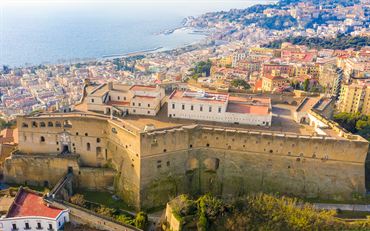
  • Castel Sant'Elmo

    Castel Sant’Elmo is one of the most imposing and panoramic fortresses in Naples, located in a dominant position on the Vomero hill.

    Its current structure dates back to the 16th century, when it was rebuilt as a star-shaped fortress designed to ensure effective military control over the city and the gulf. Throughout history, the castle played a strategic and symbolic role and was also used as a prison and military stronghold.

    Today, Castel Sant’Elmo is a cultural venue hosting exhibitions and events, but it is especially famous for the breathtaking views it offers over Naples. From its terraces, visitors can admire the historic center, Mount Vesuvius, the Gulf of Naples, and the surrounding islands.

    Visits are often combined with the nearby Certosa di San Martino, together forming one of the most spectacular panoramic viewpoints in the city. It is an ideal stop for anyone who wants to see Naples from above and fully appreciate its beauty.
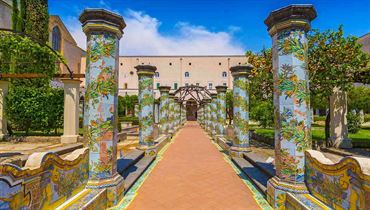
  • Monumental Complex of Santa Chiara

    The Monumental Complex of Santa Chiara is one of the most fascinating places in Naples’ historic center, an oasis of peace and beauty in the heart of the city.

    Founded in the 14th century by Robert of Anjou and Queen Sancha of Majorca, the complex includes the Basilica of Santa Chiara, the monastery, the famous Majolica Cloister, and several museum spaces. The basilica, built in Gothic style, is one of the most important religious buildings in Naples and houses the tombs of kings and distinguished figures.

    The Cloister of the Clarisses is the most beloved feature for visitors: decorated with colorful 18th-century majolica tiles, tiled columns, and ornate benches, it represents an artistic masterpiece and a perfect place for a quiet break.

    The complex also includes the Museum of the Opera of Santa Chiara, with archaeological finds and historical artifacts, as well as an area with Roman thermal remains. Santa Chiara is an essential stop for anyone visiting Naples, combining spirituality, art, and history.
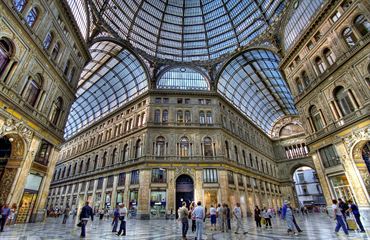
  • Galleria Umberto I

    Galleria Umberto I is one of the most elegant and iconic places in Naples, a masterpiece of late 19th-century architecture in the heart of the city.

    Built between 1887 and 1891, the gallery was part of an urban renewal project aimed at modernizing Naples and creating a European-style space for social life and commerce. Its structure features a grand cross-shaped layout topped by an impressive glass-and-iron dome that floods the interior with light.

    The floor is decorated with a large mosaic depicting the zodiac signs, and the entire space is enriched with refined architectural details. Today, the gallery hosts shops, cafés, and historic venues and serves as a passageway between Via Toledo, Piazza del Plebiscito, and the Teatro di San Carlo.

    It is the perfect place for a short stop, to observe city life, and to take striking photographs beneath its majestic dome.
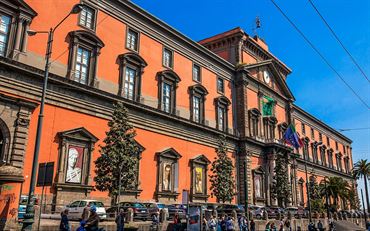
  • National Archaeological Museum of Naples

    The National Archaeological Museum of Naples (MANN) is one of the most important archaeological museums in the world and a fundamental stop for anyone interested in ancient history.

    The museum houses an extraordinary collection of Greek and Roman artifacts, including many works from the excavations of Pompeii, Herculaneum, and Stabiae. Statues, mosaics, frescoes, and everyday objects offer a vivid insight into life in ancient Rome.

    Among the most famous sections are the Farnese Collection, featuring monumental sculptures such as the Farnese Hercules and the Farnese Bull, and the Pompeian mosaic collection, considered one of the richest and most spectacular in the world. The museum also preserves the famous Secret Cabinet, displaying erotic artifacts from the Vesuvian sites.

    Located in Piazza Museo near the historic center, the MANN offers a journey through time and highlights the deep connection between Naples and Mediterranean civilization.
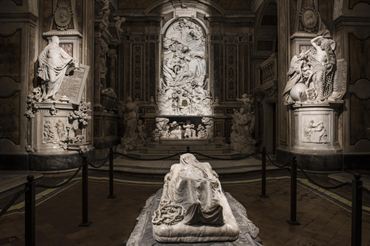
  • Museum of the Sansevero Chapel

    The Sansevero Chapel is one of the most extraordinary and mysterious places in Naples, famous for housing some of the most fascinating sculptures in the world.

    Located in the heart of the historic center, the chapel was transformed in the 18th century by Prince Raimondo di Sangro, a charismatic and controversial figure passionate about science, alchemy, and the arts. The museum is especially renowned for the “Veiled Christ,” a masterpiece by Giuseppe Sanmartino (1753), admired for the incredible realism of the marble veil covering Christ’s body.

    Alongside the Veiled Christ are other powerful works such as “Modesty” and “Disillusion,” as well as the famous anatomical machines—two skeletons with a reconstructed circulatory system that fuel legends and curiosity.

    A visit to the Sansevero Chapel is an intense experience blending art, symbolism, and mystery, and is an essential stop for discovering Naples’ most intriguing side.
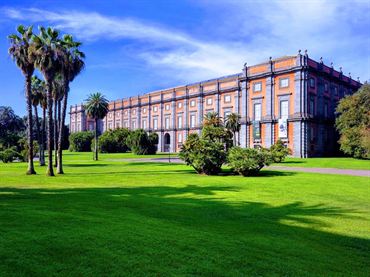
  • Museum and Royal Wood of Capodimonte

    The Museum and Royal Wood of Capodimonte is one of Italy’s most important cultural complexes, where art and nature come together in a unique experience.

    The museum is housed in the Capodimonte Palace, built in the 18th century by Charles of Bourbon as a royal residence and to display the extraordinary Farnese Collection. Today, Capodimonte features masterpieces by Caravaggio, Titian, Raphael, Botticelli, Parmigianino, and many others.

    Among the most famous works are Caravaggio’s “Flagellation of Christ” and Titian’s “Danaë,” along with collections of porcelain, historic furnishings, and contemporary art. The museum offers a vast and fascinating itinerary for art lovers.

    Outside, the Royal Wood of Capodimonte is a large historic park with avenues, lawns, and panoramic viewpoints, perfect for walking and relaxing. Once a royal hunting reserve, it is now one of Naples’ main green spaces.
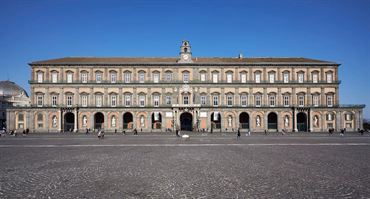
  • Royal Palace of Naples

    The Royal Palace of Naples is one of the city’s most important historic buildings and a symbol of royal power and grandeur.

    Located in Piazza del Plebiscito, the palace was built starting in the 17th century and served as the residence of Spanish viceroys and later Bourbon kings. The exterior is characterized by the famous façade with statues of the Kings of Naples, while the interiors feature lavish halls and richly decorated rooms.

    Highlights include the Grand Staircase, the Throne Room, the Royal Chapel, and the sumptuous historic apartments adorned with frescoes, tapestries, and period furnishings. The palace also houses the National Library Vittorio Emanuele III.

    Visiting the Royal Palace means stepping into the history of Naples and reliving the atmosphere of court life in one of the city’s most scenic settings.
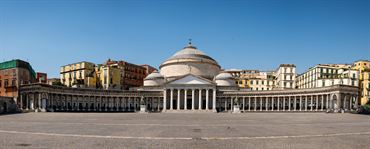
  • Piazza del Plebiscito

    Piazza del Plebiscito is the most famous and monumental square in Naples, a vast open space that represents the symbolic heart of the city.

    It is located between the Royal Palace and the Basilica of San Francesco di Paola, creating an impressive architectural setting. The basilica, with its semicircular colonnade inspired by the Pantheon in Rome, gives the square a solemn and majestic atmosphere.

    The square takes its name from the 1860 plebiscite that led to the annexation of the Kingdom of the Two Sicilies to the Kingdom of Italy. Today it often hosts public events, concerts, and cultural activities and is also a popular place for strolling and admiring Naples’ landmarks.

    Piazza del Plebiscito is a must-see, especially at sunset or in the evening, when the lighting enhances its monumental beauty.
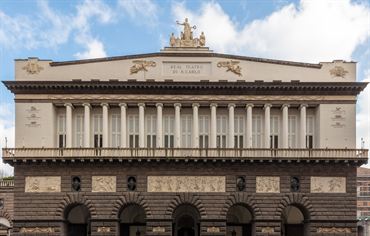
  • Teatro di San Carlo

    The Teatro di San Carlo is one of the most prestigious opera houses in the world and a symbol of Naples’ rich musical and cultural tradition.

    Inaugurated in 1737, it is the oldest opera house in Europe still in operation. Its history is closely linked to the Bourbon kings and to the great composers and performers who have appeared on its stage. The theater is renowned for its exceptional acoustics and the elegance of its auditorium, with gilded boxes and a magnificent central chandelier.

    The Teatro di San Carlo can also be visited through guided tours, allowing visitors to explore its interiors and learn about its history. Attending a performance here is an unforgettable experience, immersing visitors in the excellence of Italian opera.

    The theater is located just steps from Piazza del Plebiscito and Galleria Umberto I, making it an essential stop in the monumental heart of Naples.

Contatti

Segreteria Evento

Phone +39 351 7751576


LM FASHION

For appointments on March 9th and 10th

Phone +39 333 5015314
info@lmfashion.it
info@lmfashionshow2027.com